
Greenwood County Sheriff’s Most Wanted: Verified Facts
The plain fact: Greenwood County has no verified Sheriff's Most Wanted list to browse. There is no dedicated page and no person-by-person rundown. No official count exists, no posting schedule, no photo policy, and no reward offer. No "Warrant Wednesday" feature exists either. A commercial site can label a photo or report however it likes, but that does not turn it into a standing official list.
Public self-search for active warrants is also missing. The Warrants Division page is marked "Coming soon," though it does list a staff contact route. What the county publishes instead is a request process. Ask staff or the court for confirmation, within the limits of what the office may lawfully share.
Why Greenwood County Has No Public Wanted List
No online list does not mean no warrants. It means Greenwood County has not opened a public Sheriff index on its official pages. So there are no verified listing fields to repeat, such as a photo, a last known location, a charge summary, or an update date. Printing details like those without a county source would create a fake version of a law-enforcement record, which is both unreliable and unsafe.
The Sheriff does link an official Facebook account. The county does not call it a complete wanted-person database, a booking feed, or an archive. A social post can be useful community news on the day it runs. Yet it cannot tell you whether a particular warrant is still active. Greenwood has not released a Sheriff inmate app for warrant or booking lookups either.
One common mix-up deserves attention. The Greenwood County Detention Center portal shows people currently in county custody. Its current-only setup is not a list of people being sought and not an archive of releases. Someone named in a report may be released, transferred, or never booked at all. The record you need depends on the exact question you are asking.
What a Greenwood County Warrant Confirmation Can Establish
With no verified public Sheriff list, a field guide here cannot be a profile table. It is instead a narrow map of what the right official channel can clear up. The Warrants Division handles a specific warrant question. Court records show later filings and outcomes. Both have limits, especially where a matter is sealed or restricted. The county's Warrants Division page is the source for the published contact route and its lack of a self-service search.
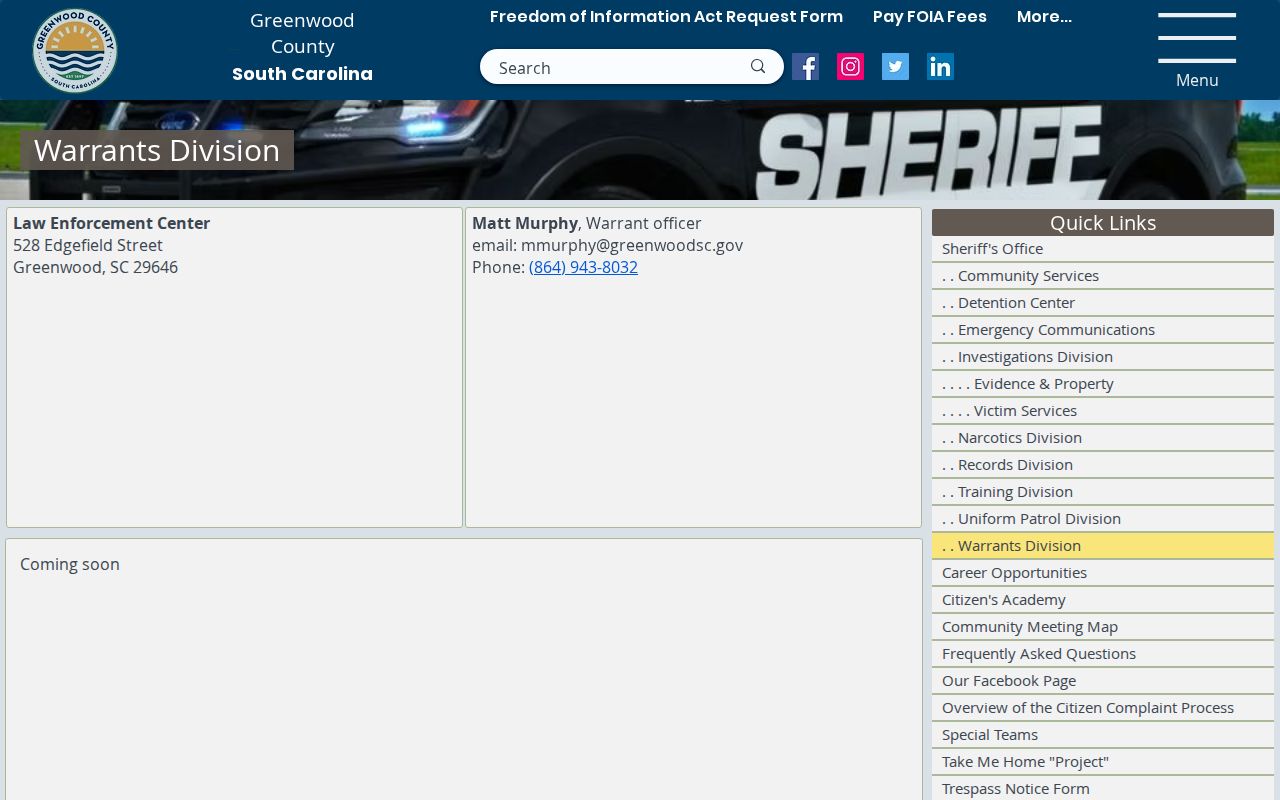
The office expects a call or message, not a click on a name search. Give staff a clear, narrow question. Provide whatever information they direct you to. A response may be limited by the stage of the matter, identity uncertainty, or a restriction on the record. Do not read a limited answer, a missing social post, or a no-result on some other site as proof that a warrant never existed or has been resolved. When the question touches your own legal position, the safe route is the court or an attorney.
| Official confirmation point | What it can establish |
|---|---|
| Warrants Division inquiry | Whether the office can provide current information about a specific Greenwood County warrant question. |
| Court or attorney route | The appropriate lawful next step for a person concerned about that person’s own matter. |
| Public Index or Clerk record | Filed case activity, a warrant return, a bond event, or later court material when publicly available. |
| Detention Center roster | Current county custody only, not a warrant confirmation or a final case result. |
Greenwood County does not publish a public catalog that sorts matters by warrant type. It is more useful to compare the record stages an official source can actually verify. A Warrants Division response covers a current question. A case docket can show a later filing or return. Bond Court handles a stage after an arrest or filing. The Public Index and Clerk route open the door to later public case material. Keeping these stages apart stops you from treating an early charge, a calendar entry, or an old article as a present warrant determination.
How to Check a Greenwood County Warrant
Use a confirmation path that is specific, safe, and respectful of court process. The county offers no person-name portal, so start with the office that administers warrants rather than guessing from a third-party listing. This process exists for verification. It is not a tool for dodging legal process.
- Contact Warrant Officer Matt Murphy at the Greenwood County Warrants Division with the identifying information needed for the office to assess the question.
- Use the published telephone number, email, or Law Enforcement Center contact route and follow the office’s directions about what it can release.
- If the question concerns your own possible warrant, consult an attorney or contact the appropriate court about a lawful appearance or next step.
- Use the court record route after a filing or arrest to follow later case activity, bond information, and disposition rather than assuming the original charge is the outcome.
For a related custody or booking-record question, the county's official Greenwood County records and roster routes separate current detention from a later court case. A person can drop off the current-only roster after release, transfer, or correction, even while other official records remain subject to access rules.
Greenwood County Warrant and Court Record Types
People toss the word "warrant" around as if it names one thing. In Greenwood County it does not. Warrants, dockets, and case files live in separate channels, and the comparison here keeps those stages apart. Nothing below promises that every category is searchable online. A docket entry, for its part, is a court record, not a live warrant status.
| Question or record type | Best verified Greenwood County route | Important limit |
|---|---|---|
| Current warrant-status question | Warrants Division staff confirmation | No official public self-search is published. |
| Filed case or warrant-return activity | South Carolina Judicial Branch Public Index or the Clerk | A court entry is not represented as a live warrant-clearance service. |
| Bond-stage information | Greenwood County Bond Court or the appropriate magistrate/court route | Bond-stage material is not a final disposition. |
| Later case outcome | Public Index and Clerk of Court record research | Charges can change, be dismissed, reduced, tried, resolved through a plea, or otherwise disposed. |
Greenwood County Tips and Safety
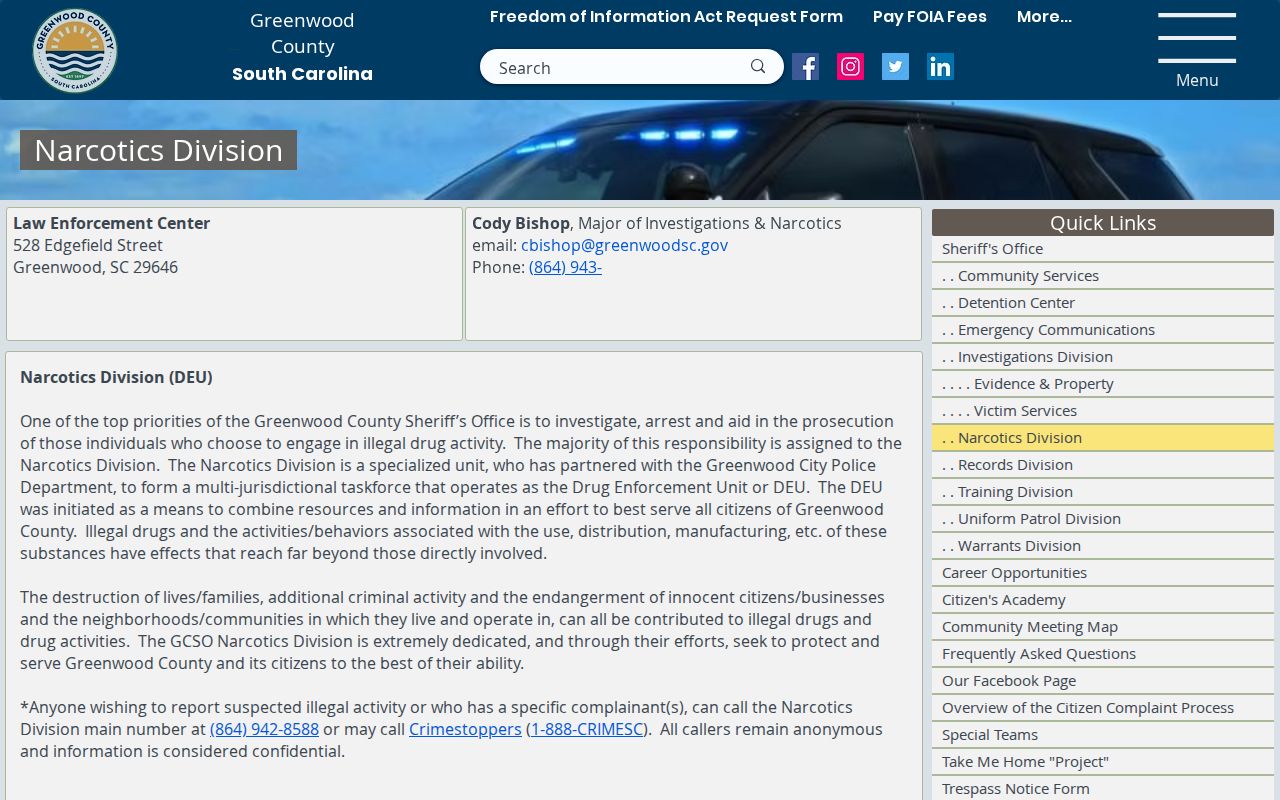
A tip line and a warrant search do different jobs. Spot possible drug activity in Greenwood County? That report goes to the Sheriff's Narcotics Division. Wondering whether a warrant exists? Ask the Warrants Division instead. Neither one replaces 911. If danger is happening right now, call 911 first and let responders handle it. Otherwise, share what you know with trained staff and keep your distance from the person involved.
Official tip routes
Narcotics Division: (864) 942-8588
CrimeStoppers: 1-888-CRIMESC
According to the county, CrimeStoppers calls are anonymous and confidential. No verified reward policy is published for this resource.
Warrants Division
Matt Murphy, Warrant Officer
Law Enforcement Center
528 Edgefield Street
Greenwood, SC 29646
(864) 943-8032
mmurphy@greenwoodsc.gov
The county’s Narcotics Division information identifies the anonymous tip and CrimeStoppers routes.
These channels exist for passing information safely. They cannot confirm an active warrant, and they are no substitute for emergency services.
Greenwood County Bond Court and Case Follow-Up
Court records are where a case picks up its history. Greenwood County Bond Court sits inside the Law Enforcement Center at 528 Edgefield Street. The Clerk of Court and the General Sessions route work from 528 Monument Street, Room 114. That split in buildings mirrors a split in records. A bond event is one thing. The later case file is another.
To follow a case, open the South Carolina Judicial Branch Public Index and choose Greenwood County. Be careful here. A scheduled date is not the same as an actual outcome. The Clerk's office offers public terminals but will not run specific General Sessions research over the phone. Charges can be amended, reduced, dismissed, tried, resolved by plea, or disposed of some other way. Sealed or expunged matters may stay out of public view.
Public Record Search
Sponsored Results